Start with the question you want a museum to answer. What stood on the Acropolis? How did people live across ancient Greece? What happened after antiquity? Choosing one thread makes a visit more rewarding than rushing through several collections.
For a first trip, plan one substantial museum visit and leave an optional second stop. Check opening hours, temporary exhibitions and accessibility before fixing the rest of the day.
To understand the Acropolis: Acropolis Museum
Choose the Acropolis Museum if you want the closest connection between the monuments on the hill and the sculpture associated with them. The Parthenon displays help you look beyond the building’s silhouette to its carved details. Five original Caryatids are displayed here; the figures on the Erechtheion are copies. The museum explains their history.
The excavated neighbourhood beneath the building adds a different scale: the remains of everyday urban life below the major monuments. The museum’s visit information covers access to the excavation and galleries.
Planning point: the museum and Acropolis archaeological site have separate tickets. A reservation for one does not provide entry to the other. Leave time for their separate entrances and any security checks. For a visit with younger travellers, our Athens with children guide helps you pair a museum with play, food and a manageable pace.
For a wider view of antiquity: National Archaeological Museum
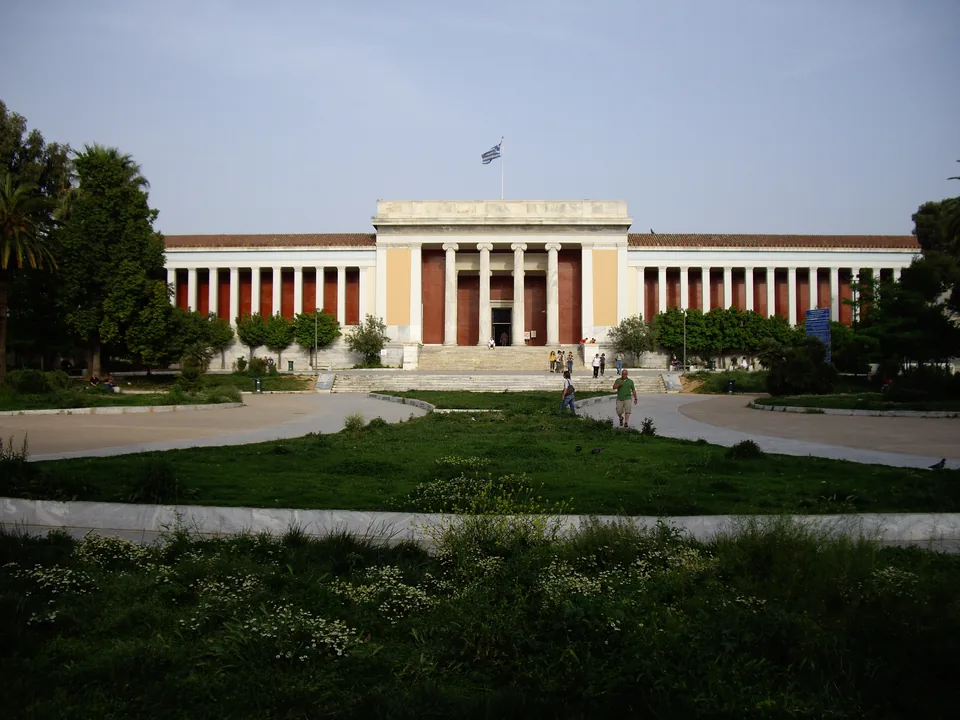
Choose the National Archaeological Museum when your interests reach beyond Athens. Its collections include prehistoric material, sculpture, metalwork and antiquities from Egypt, alongside other collections. Mycenaean gold and the Antikythera Mechanism are strong starting points. Browse the museum’s official collection guide before your visit.
Pick two or three themes rather than trying to see everything. For example, follow changing representations of the human figure, compare the materials used by craftspeople, or explore objects connected to the sea.
The familiar name “Mask of Agamemnon” should be understood as the object’s conventional name. For the Antikythera Mechanism, the museum’s research resource shows how scientific imaging has changed scholars’ understanding of this ancient astronomical calculator.

For icons and the centuries after antiquity: Byzantine and Christian Museum
The Byzantine and Christian Museum holds icons, wall paintings, mosaics, manuscripts, textiles and other works spanning many centuries. It is a useful choice if your Athens visit has so far focused on classical temples and you want to follow the story further.
Spend time with the materials as well as the imagery: painted wood, glass, stone, fabric and handwritten pages tell different stories about making, use and belief. A few carefully chosen works can be more rewarding than trying to take in every room.
For Greek culture across periods: Benaki Museum of Greek Culture
The Benaki offers collections covering ancient, Byzantine, post-Byzantine and later Greek art and life. Costumes, domestic objects and historic heirlooms help broaden a visit beyond monumental sculpture. Its collection directory is a useful place to start.
Choose the right building. The Museum of Greek Culture, Museum of Islamic Art, Pireos 138 and Ghika Gallery are different destinations. Use the venue named on the exhibition listing when planning your route or buying admission.
For the prehistoric Aegean: Museum of Cycladic Art
The Museum of Cycladic Art is a good choice for visitors interested in the early Aegean and the distinctive marble figures associated with it. Its wider holdings also cover ancient Greek and Cypriot cultures. The permanent and temporary exhibitions give you several ways into these cultures.
Look closely at scale, posture and surviving detail. A simple-looking form can raise complex questions about use and meaning. Leave room for the uncertainty described in the labels rather than assuming every object’s purpose is known.
For working inventions: Kotsanas Museum
The Kotsanas Museum in Athens presents functional models and documented reconstructions of ancient technology. It offers a practical way to explore mechanisms, calculation and engineering.
This is useful to know when choosing between museums: the Antikythera-related displays here are reconstructions; the ancient fragments belong to the National Archaeological Museum’s collection. If demonstrations or hands-on opportunities are a priority, choose a visit or activity that explicitly includes them.
If you have a more specific interest
The Ilias Lalaounis Jewelry Museum focuses on jewellery, microsculpture and making. The separate Benaki Museum of Islamic Art broadens the cultural geography of an Athens museum day. Both are worth considering when their subject interests you more than another general overview.
Three manageable pairings
- Acropolis and its museum: combine the site’s architecture with the museum’s objects. Book and check each independently, and leave a proper break between them. Our guide to ancient Athens sites helps you choose what to pair with the museum.
- A museum-district day: choose one or two among the Benaki Museum of Greek Culture, Museum of Cycladic Art and Byzantine and Christian Museum. Keep the second visit optional.
- One major collection, then the city: give the National Archaeological Museum a generous part of the day, followed by a meal or neighbourhood walk.
Before you leave, confirm the correct building, last admission, bag rules, photography policy and any lift or step-free access you need. Temporary displays can change what is available to see.
For a guided city experience, compare Athens culture, food and cooking options. Read the specific itinerary carefully: museum admission, archaeological-site tickets and guiding are not included unless your selected experience explicitly says they are. If you would like a sea day too, leave another day for an Athens or Saronic cruise.
This guide was editorially reviewed on 1 November 2026. Check current venue, event and transport information before setting out.